
Evidence #12
Charts covering relationships, fertility, weight loss, city growth, currency, AI, and nuclear energy.

Evidence is a unique dinner experience with the purpose of learning as a group and establishing meaningful relationships. To accomplish this, we assemble leading investors, founders, operators, and creatives. Each guest contributes a chart for discussion that is “evidence of a changing world.” These charts spark an evening of discussion and discovery. These dinners are hosted by Index Ventures.
Dinner Summary (via ChatGPT):
The group dinner hosted by Index Ventures in NYC, led by Susana Rojas, convened a diverse mix of industry leaders to engage in thought-provoking discussions on a range of pressing topics.
Conversations delved into the profound transformation of relationships in a digital era, raising questions about the resilience of love and the future role of AI in matchmaking.
The decline in global fertility rates and the resulting political, social, and economic challenges were explored, prompting debates on whether age-related policies should be reevaluated to reflect demographic realities better.
The discussion also tackled the shifting dynamics of tech talent between San Francisco and New York City, highlighting the affordability crisis and questioning whether high house prices truly indicate a healthy economy.
The debate on nuclear energy versus renewables brought to light the need for better public understanding and top-down policy initiatives to drive significant emission reductions.
These conversations underscored the interconnectedness of technological advancements, societal shifts, and economic strategies, emphasizing the necessity of adaptability and innovation in navigating a rapidly evolving world.
Interested to get these notes? Subscribe here.
Want to read in slide format? See slides here.
This dinner was attended by:
3 founders of private technology companies
3 technology investors
3 operators from technology companies and a large financial services company
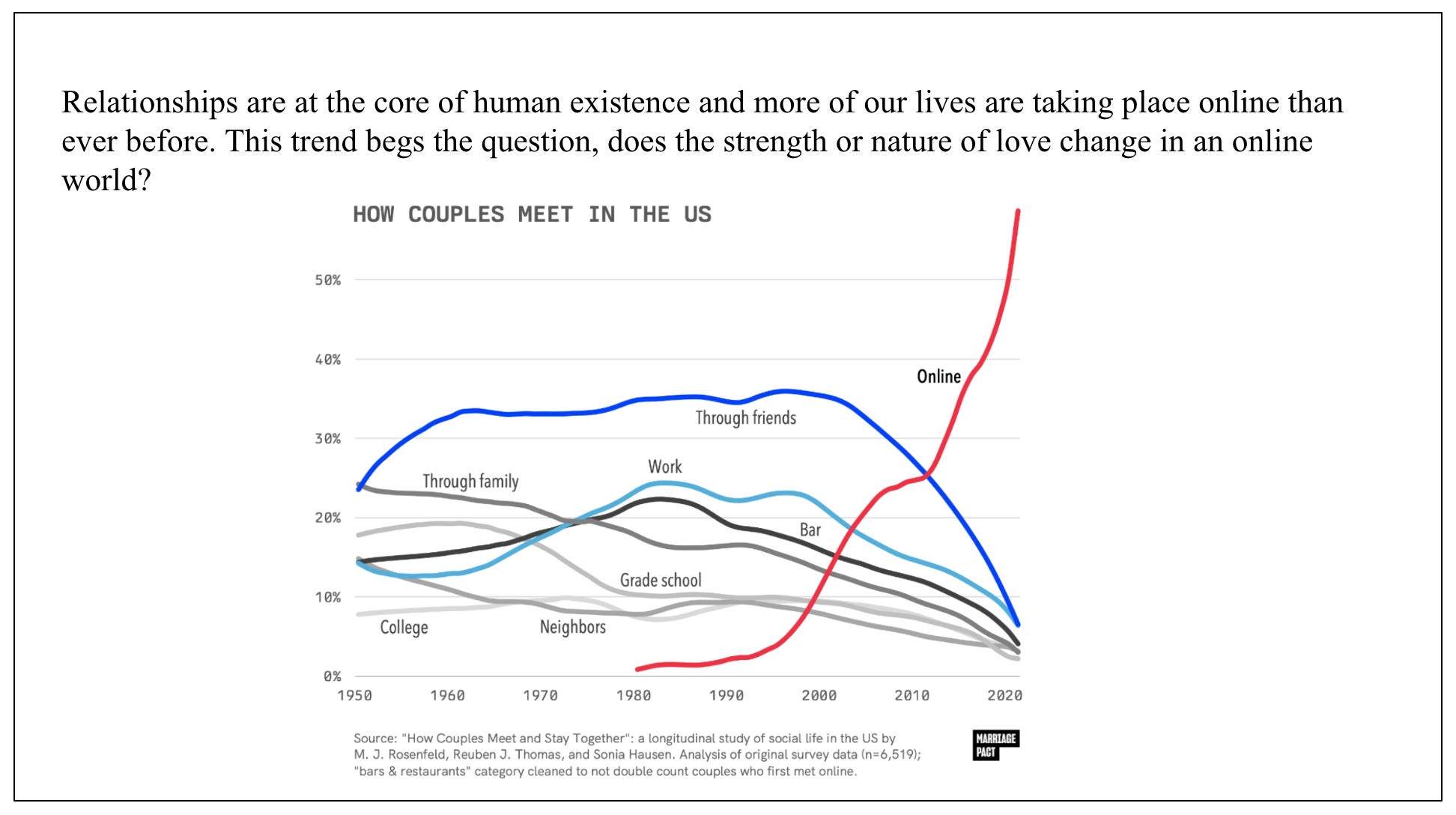
Relationships have always been at the core of human existence, defining our emotional landscape and shaping our experiences. With more of our lives now unfolding online than ever before, the dynamics of love and connection are undergoing a profound transformation. This shift raised intriguing questions about the nature and resilience of love in a digital era, akin to scenarios depicted in Black Mirror.
It's only a matter of time before AI plays a significant role in matchmaking and dating. The rise of online interactions also means that more couples are more likely to be multicultural, but what are the impact of these changes on marriage and divorce rates? Meeting online also unlocks the abundance of choices, potentially leading to lower commitment levels (25% of 40 year olds and older in the US remain unmarried). Dating apps, which currently don't always monetize from matching people, may explore alternative revenue models such as charging users when they delete the app!
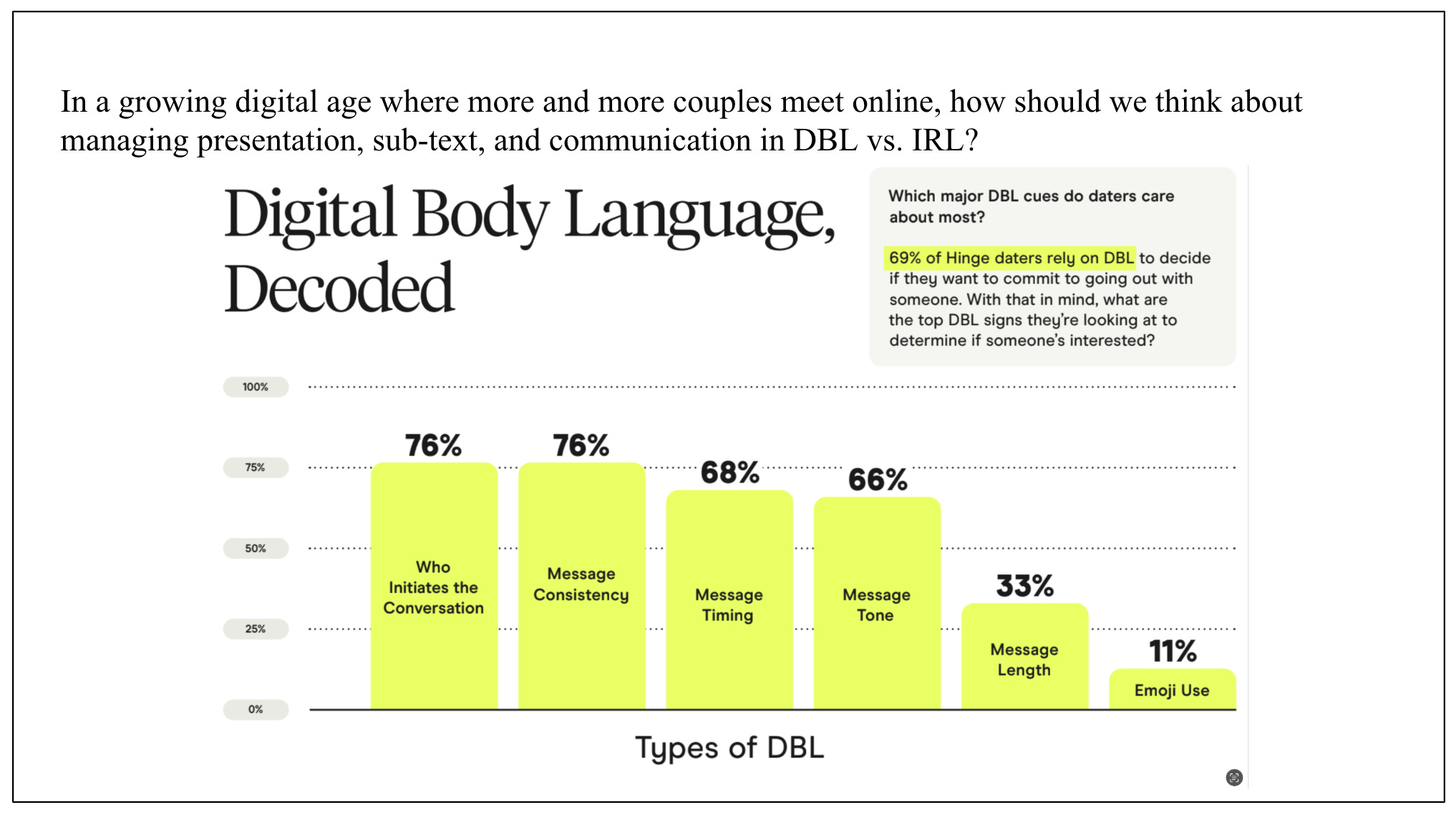
We discussed the complexities of managing communication in the age where more and more couples meet online. The contrast between digital (DBL) and in-real-life (IRL) interactions ultimately boil down to how everything in life ultimately revolves around language as the connective tissue of culture. Individuals often portray their online personas as different from who they truly are, (but putting up a fake persona also happens IRL?). Some noted that it’s becoming quite evident that ChatGPT will progress in its ability to emulate human speech, underscoring the importance of authenticity. As language plays a pivotal role in both contexts, distinguishing between human and AI communication is increasingly challenging, even in video interactions. We reflected on how trust and authenticity are perceived and managed across both digital and physical realms.
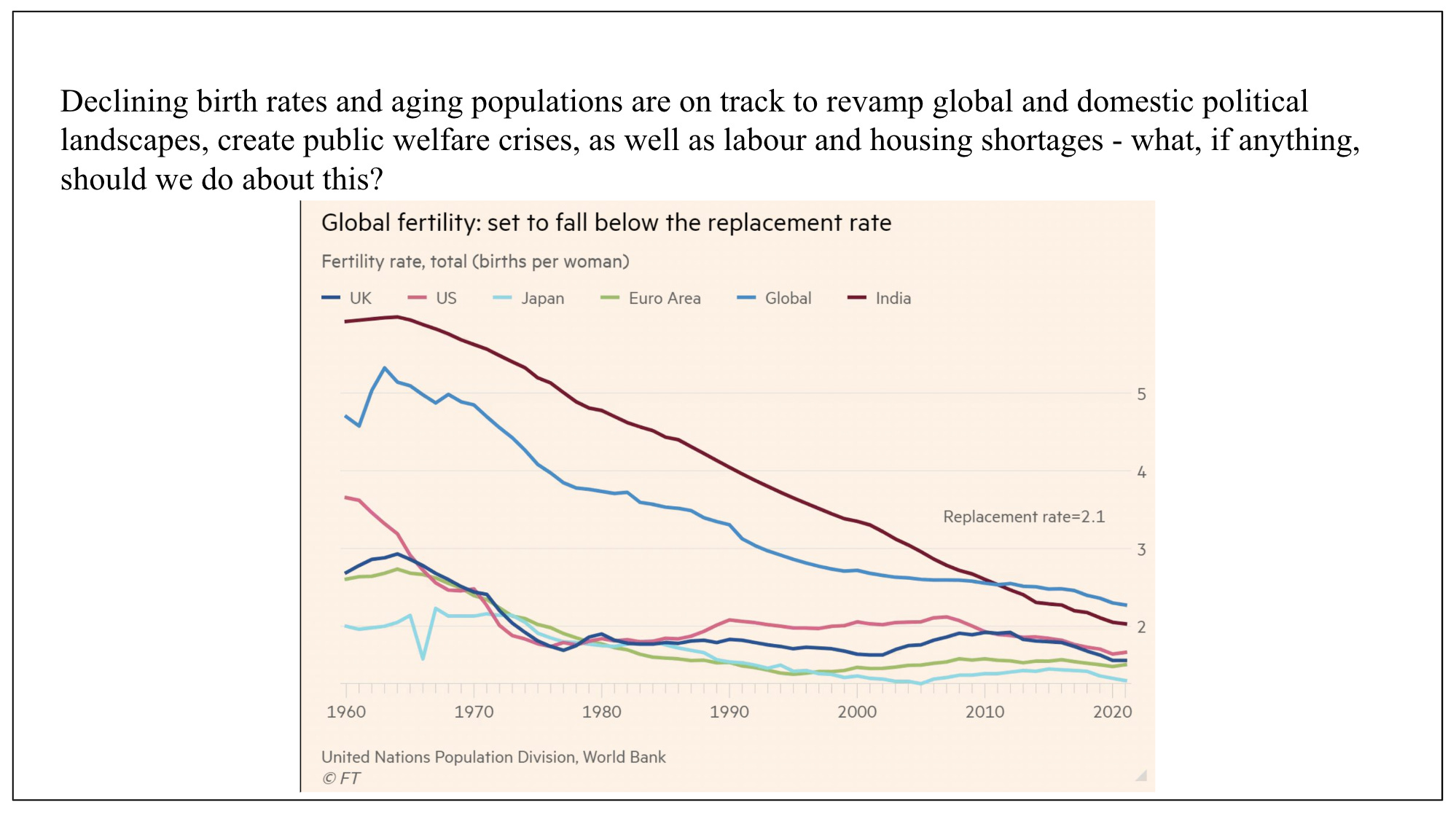
The decline in global fertility rates below replacement levels presents significant challenges across political, social, and economic landscapes. As birth rates decrease and populations age, governments worldwide face impending crises in public welfare, labor shortages, and housing demands. Addressing these issues has required multifaceted approaches – many of which haven’t been successful, including policies that support family-friendly environments, encourage higher birth rates through incentives, and adapt social security and healthcare systems to accommodate aging populations. Innovations in immigration policies and workforce development strategies also play crucial roles in mitigating some of these effects. This chart sparked debate on how some cultures view having kids as selfish, while others view it as necessary for economic progress.
We discussed how AI will affect global production and whether we should be reevaluating age-related policies (since age is an objective measure), including potential limits on voting age, to ensure representation reflects demographic realities or avoiding overly conservative or religious trends driven by older voter preferences. Since age influences cognitive processes (when does the frontal lobe fully develop?), why would an 17 year old not be able to think as critically, if not more, than an 85 year old? We concluded this discussion with the considerations of young people giving up on the system and potentially remaining disenfranchised.
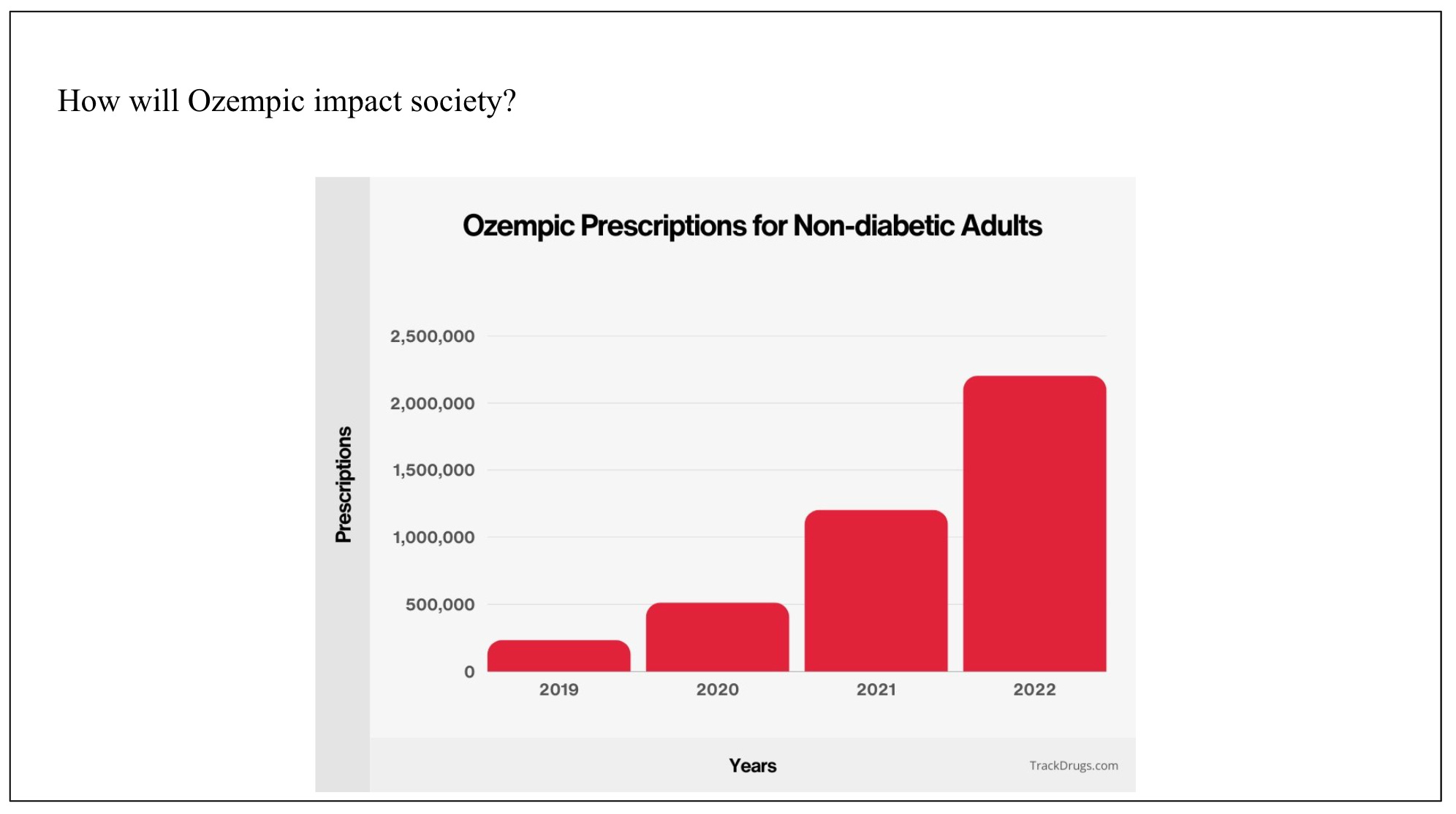
Beyond talking about the effects of Ozempic on society’s consumption of CPG products including alcohol, we discussed the ever growing dichotomy between the value of hard work and the allure of taking shortcuts. The rise of immediatism and the convenience offered by tech or drugs like GLP-1s, which promise instant results, is an efficient approach but lacks the depth and resilience that come from persevering through challenges and striving for excellence. Building true resilience and expertise requires embracing the difficulties and setbacks inherent in the hard things of life which form character and grit and are crucial for personal growth and success.
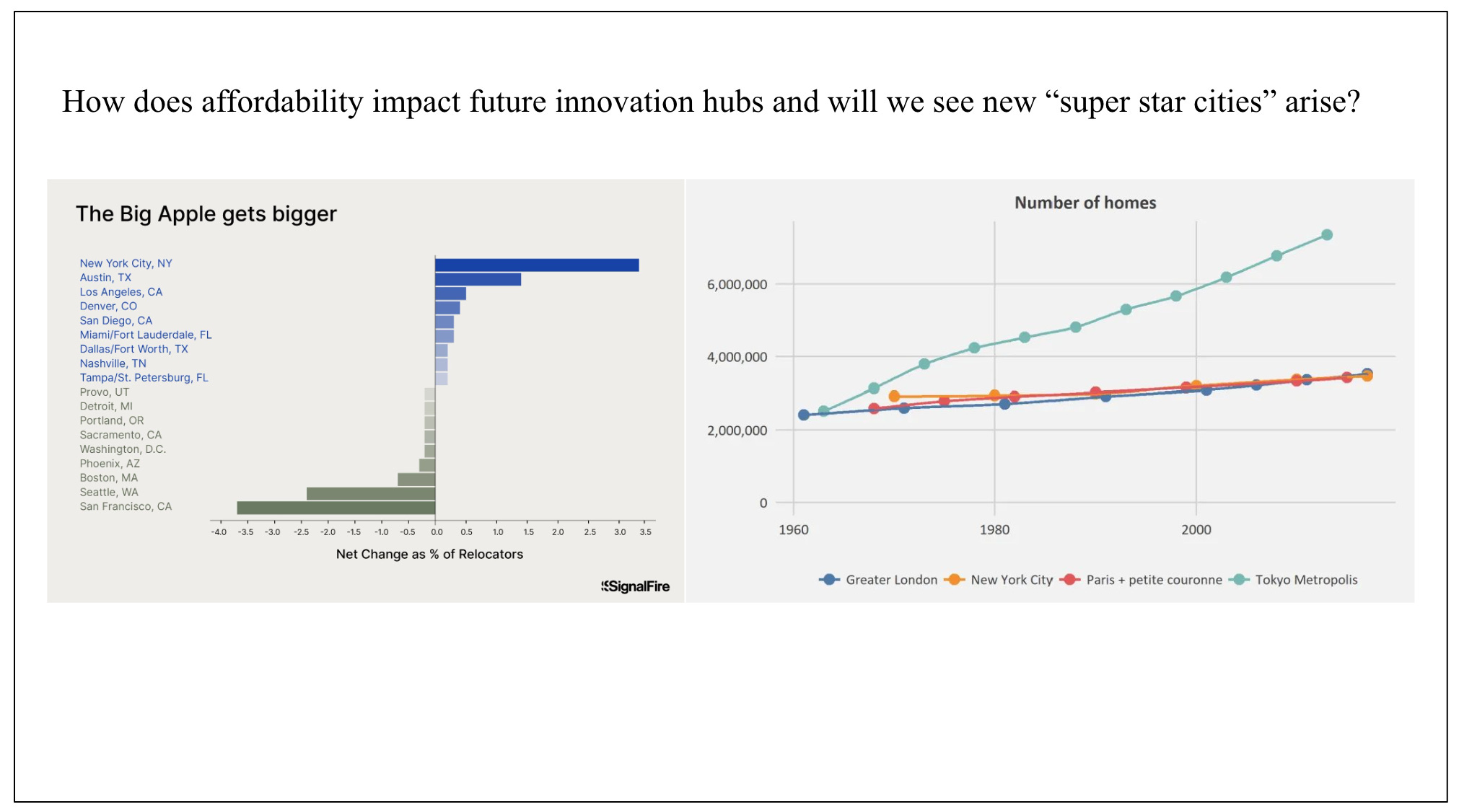
There has been a notable shift in tech talent between San Francisco and New York City as COVID began disrupting Silicon Valley's longstanding network effect, leading to increased interest in NYC or other “super star cities” as a viable tech hubs. We discussed how entrepreneurs and international talent are now navigating a broader shift in how startups operate globally including the optionality of remote work.
However, new residential construction has not reflected the influx in people and the huge supply and demand imbalance is causing an affordability crisis. Is affordability enough of a reason for tech workers to move out of these hubs? We discussed how house prices going up is usually a sign of a “healthy economy” – a flawed paradigm.
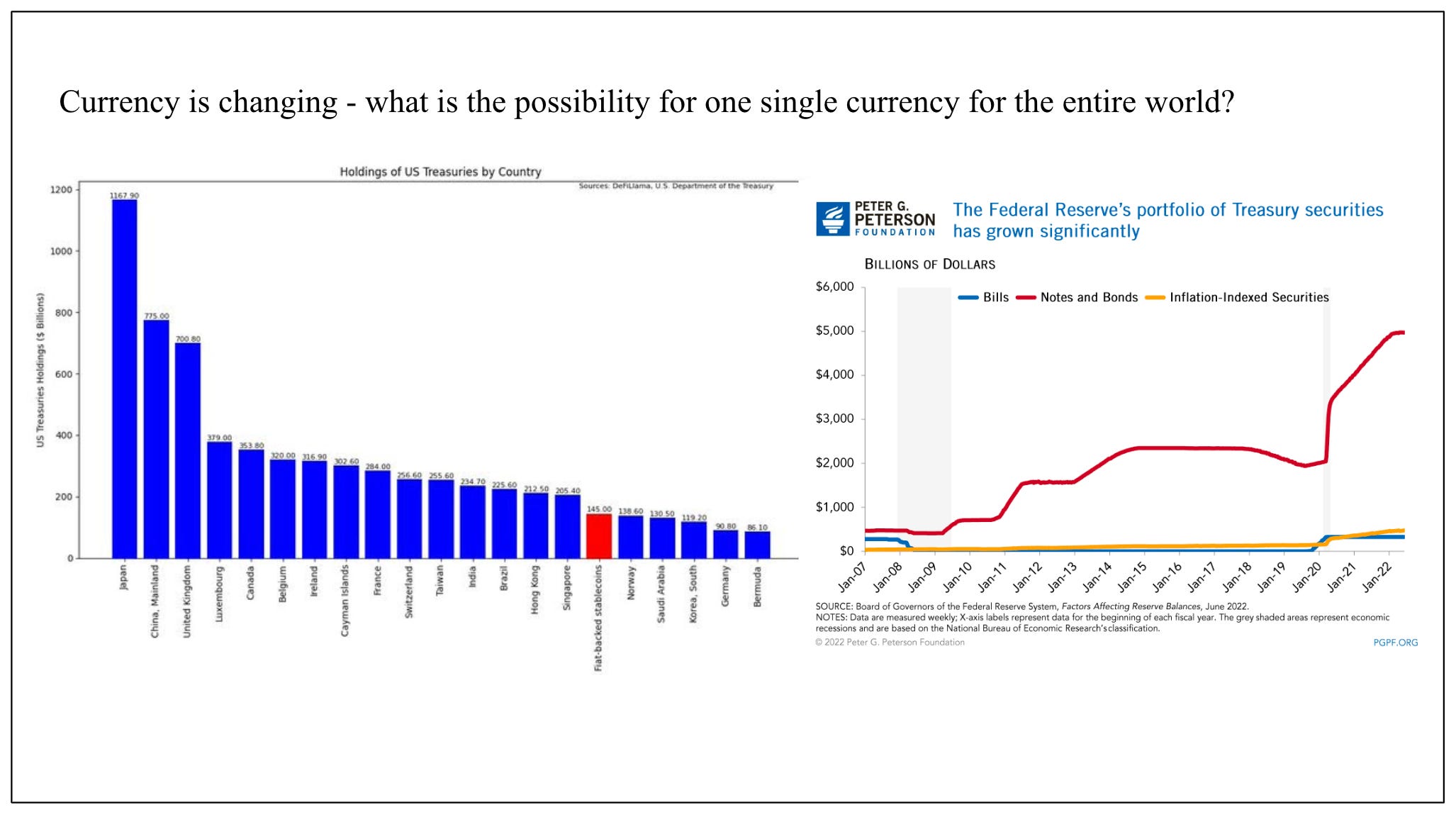
We explored the complex dynamics surrounding US debt (and who holds it) and the implications of a unified global currency protocol and crypto as a potential alternative if/when trust in traditional financial systems or governments erode. While the idea of a singular currency protocol holds theoretical appeal for simplifying international transactions and reducing currency volatility, its practical implementation remains a topic of debate (what are the effects of quantum technology?). We also delved into the game theory underpinning economic decisions, highlighting how historical cycles of monetary policy—from hard currencies like gold to pegged and fiat currencies— reflect broader shifts in economic philosophy and global power dynamics over 50 to 60-year cycles.
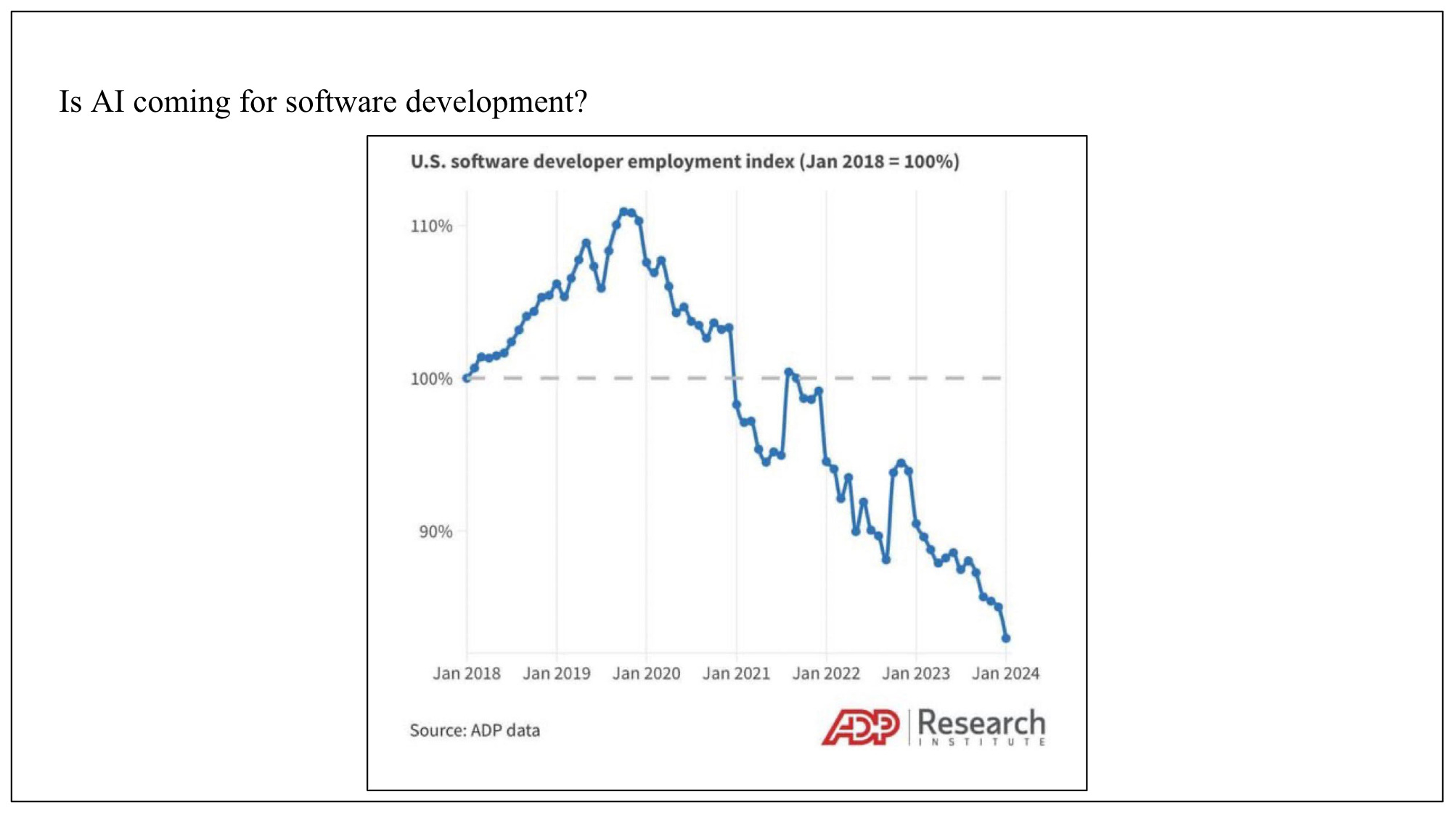
AI's role in automating software development has enabled unprecedented productivity gains (eg. higher revenue per employee ratios) and is shifting hiring dynamics (eg. companies optimizing for hiring more senior talent). We discussed how businesses leverage offshoring talent and embrace remote work models, as well as how the traditional barriers to starting a company are lowering. Today, aspiring entrepreneurs can access a plethora of tools and resources to launch and scale their ventures, placing greater emphasis on the importance of effective distribution strategies. In a world where getting started is increasingly easier, what is the role or shape of defensibility? We discussed the evolving nature of brand value in both B2B and B2C contexts (from security and personalized service to membership perks and differentiation). We also debated the distinctions between behaviorally loyal consumers versus attitudinally loyal ones who advocate for brands based on shared values and experiences.
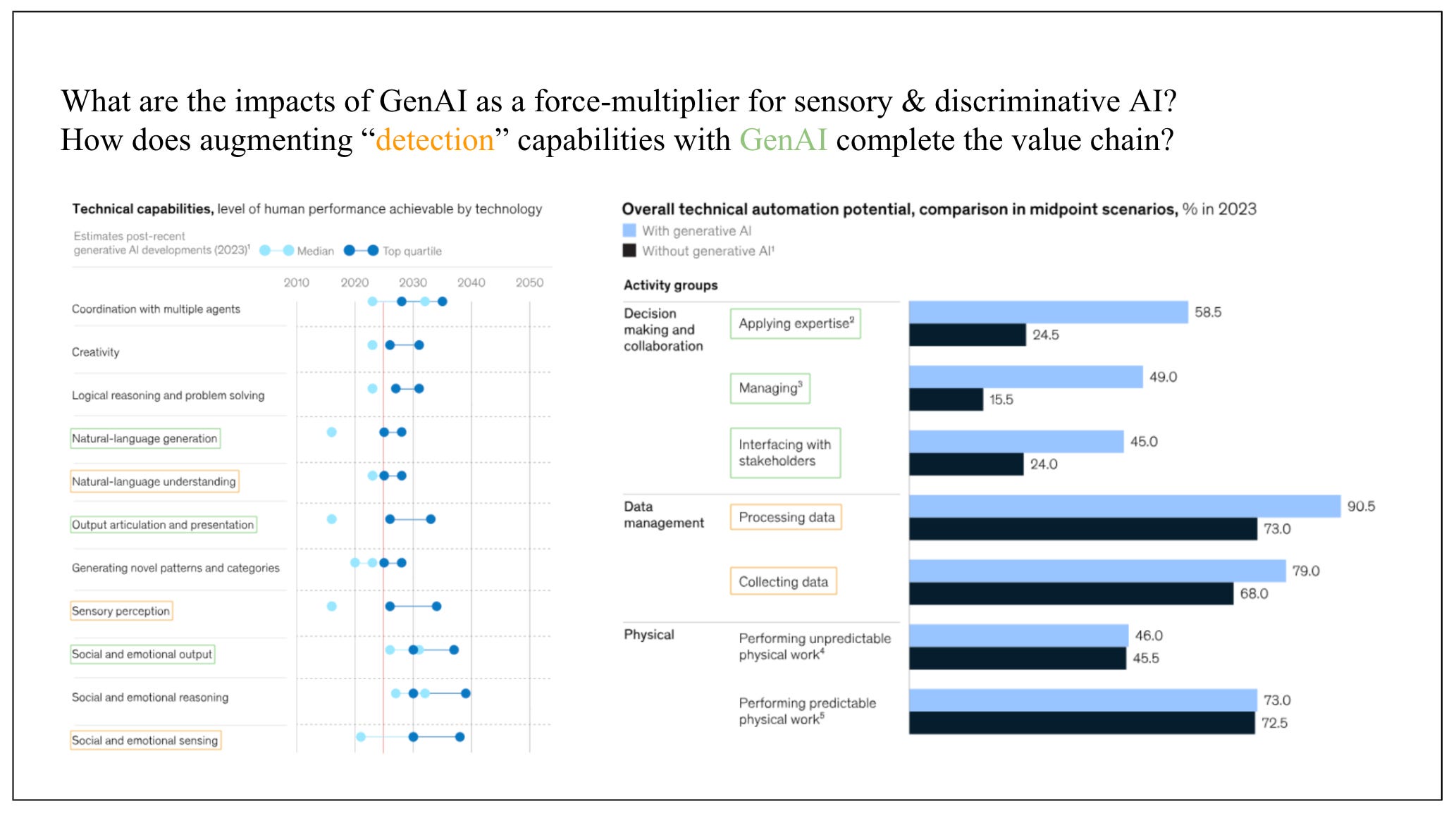
As a group, we tested the power of AI by scanning this slide and having ChatGPT give an explanation about it. TLDR: Gen AI passes the baton to humans to do the more interesting tasks!
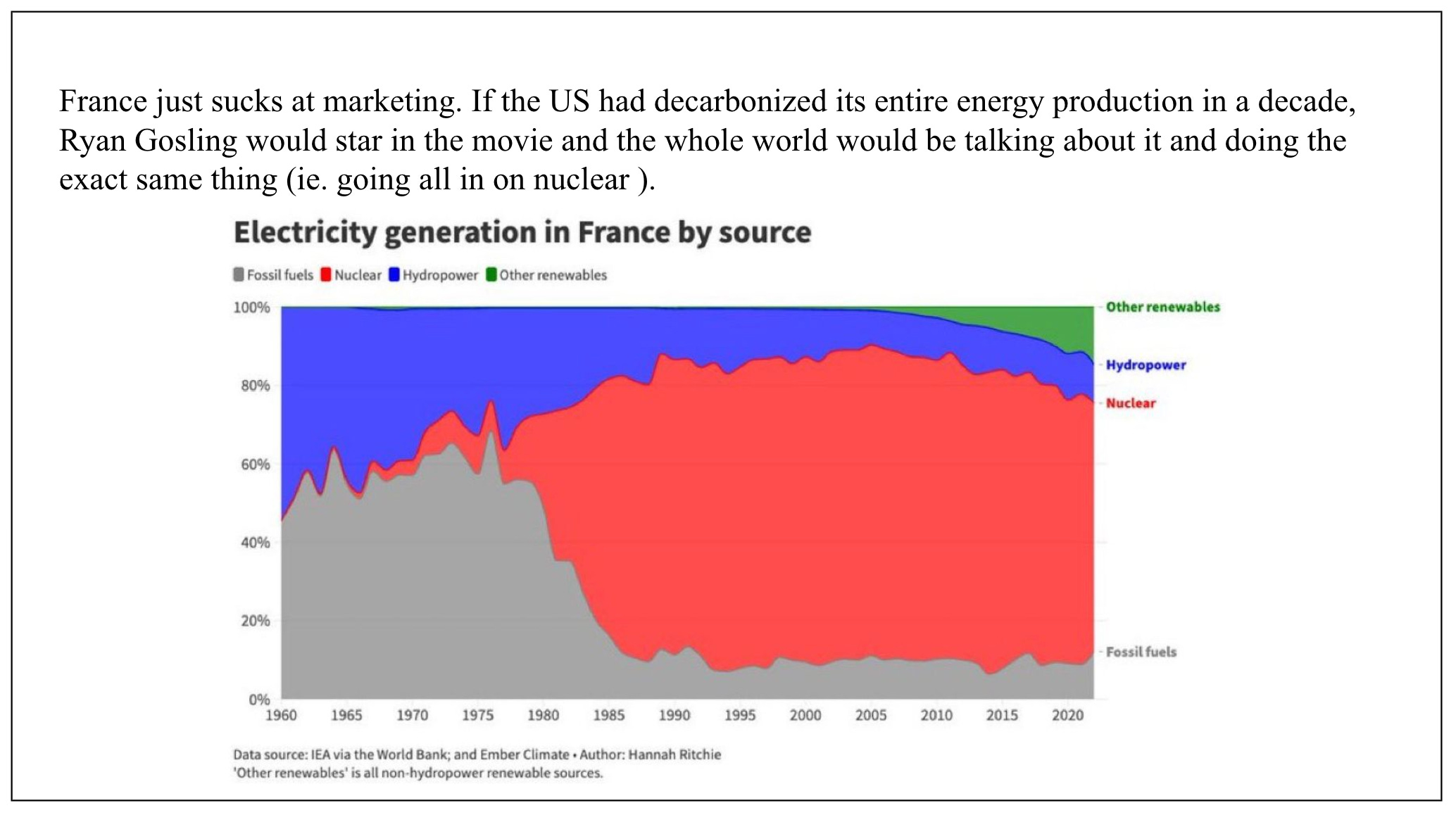
Countries have the strategy of their assets. France has established itself as a global leader in nuclear energy, with a significant portion of its electricity generated from nuclear power plants. We discussed the advantages of nuclear (and the misconception of the risks associated with it) versus other renewables, and contrasted France to the status quo in Germany, which has pursued a different strategy. We went back in history and discussed how NYC used to be powered by nuclear before gas, and debated how oil and gas companies have partnered with renewables to campaign against nuclear, fueling misconceptions. What are we teaching in schools? Kids grow up seeing pictures of the sun and the wind and scared about the association of nuclear with nuclear weapons – someone proposed having pro nuclear influencers on TikTok to demystify this energy source!
Despite the core blocks being there to reduce emissions by ~70%, it’s only top down policy and initiatives that eventually move the needle (eg. classifying nuclear as “green” and providing subsidies and friendly financing terms).
 | A guest post by
|