
Evidence #20
8 charts covering modern parenthood, AI & adolescence, the undruggable proteome, the post-labor economy, mega-project capex, the corrupted web, the app creation explosion, and engineering discipline.

Evidence is a dinner series with the purpose of enabling relationships through meaningful and open discussion. Each guest contributes a chart for discussion that is “evidence of a changing world.”
This dinner was hosted in NYC by Damir from Relentless — a seed-focused venture fund. Attendees included builders and investors from Notion, Siro, Manas AI, Simile, Mirage, Nourish, and JP Morgan Asset Management.
The Evidence at a Glance
Modern Parenthood: Millennial parents are spending dramatically more time with their children than any prior generation, likely driven not by devotion alone but by collapsing birth rates, skyrocketing childcare costs, and compressed careers that make a single child the only feasible option.
AI & Adolescence: AI chatbots offer teenagers a patient, knowledgeable tutor that outperforms most classroom teachers, but also serve as an unrestricted, manipulable adult at their fingertips — a companion capable of reinforcing the most destructive impulses of isolated, lonely kids.
The Undruggable Proteome: A 30-year dead-end in cancer research was shattered when one scientist looked where no one else was looking, unlocking a cascade of KRAS-targeting drugs that just doubled pancreatic cancer survival — and 80% of the human proteome remains untouched.
The Post-Labor Economy: Work hours have been declining for a century and AI is about to accelerate the trend violently; the existential question is whether humans will find meaning in a Renaissance of creativity or simply invent purposeless work to avoid confronting their own irrelevance.
Mega-Project Capex: Data center spending has reached nearly 1% of US GDP in just six years, surpassing the Interstate Highway System and dwarfing Apollo — and unlike every prior mega-project in American history, this one is funded entirely by the private sector.
The Corrupted Web: Over 50% of web traffic and web content is now AI-generated, removing humans from both sides of the equation. We are entering an era where the open Internet is collapsing into a sea of synthetic slop and only novel discoveries or major announcements are monetizable.
App Creation Explosion: Agentic coding has sent iOS app releases into hypergrowth even as Apple tightens its review process, democratizing software creation to the point where non-technical founders ship real products — but the gap between a working demo and a trusted product remains a canyon.
Engineering Discipline: AI made engineering discipline mandatory: the 80–90% of work that used to be coding can now be compressed 100x, but only if the codebase is clean enough for AI to navigate — making DevOps, testing, and architecture the new bottleneck.
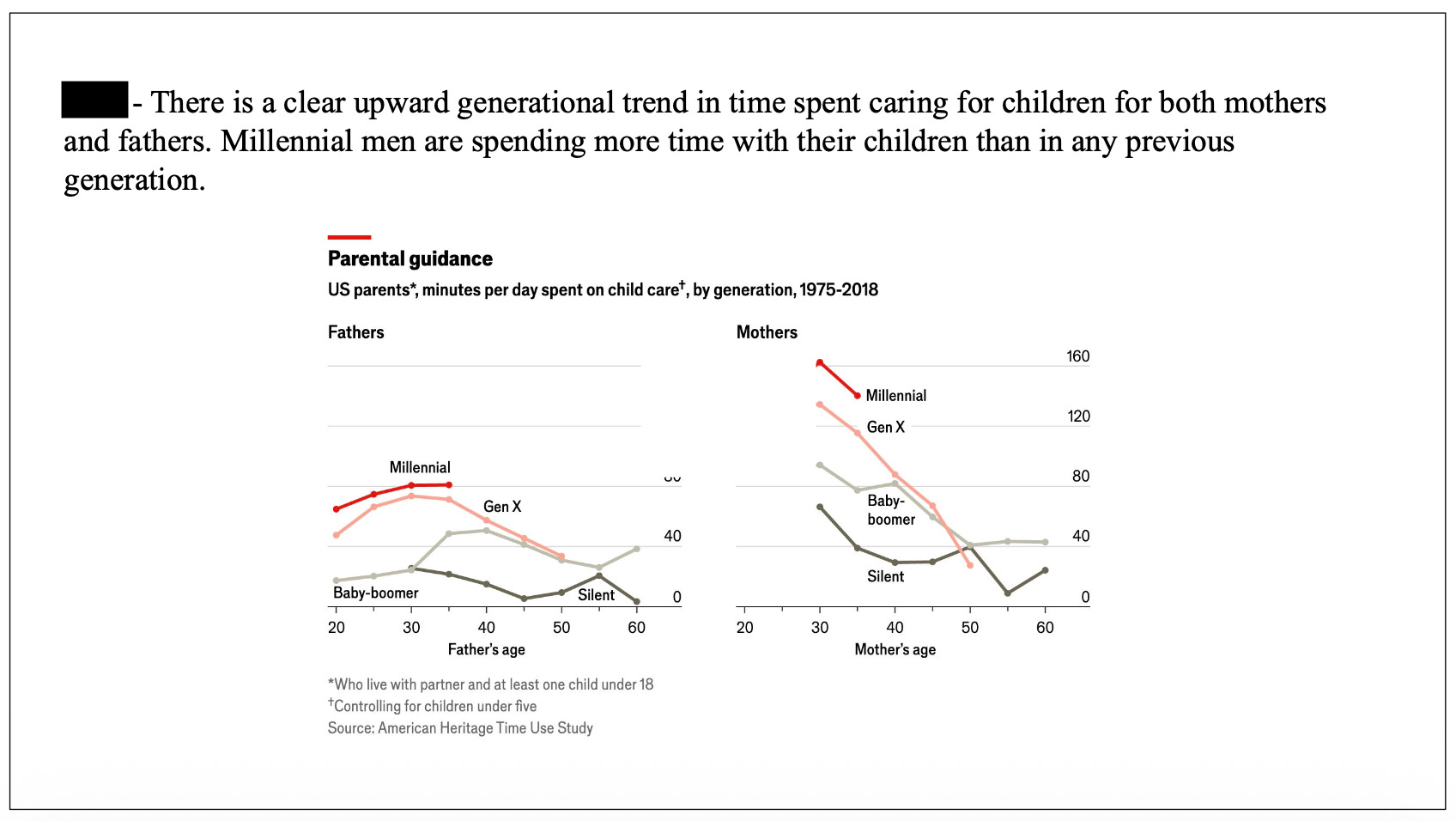
Millennial parents — fathers in particular — are spending dramatically more time on childcare than any generation before them, and the most likely explanation is not some cultural awakening but cold arithmetic: childcare costs have skyrocketed, birth rates have collapsed, and the result is more minutes poured into fewer children. The table debated whether remote work or compressed careers deserved credit, but the definitional crisis underneath was more revealing — is sitting next to your kid while scrolling TikTok really “childcare”? What lingered, though, was the possibility that the chart hints at something the data can’t fully capture: a quiet generational reawakening toward family, presence, and analog life. Less drinking, more time with loved ones, Polaroid cameras. The cycles are coming back around.
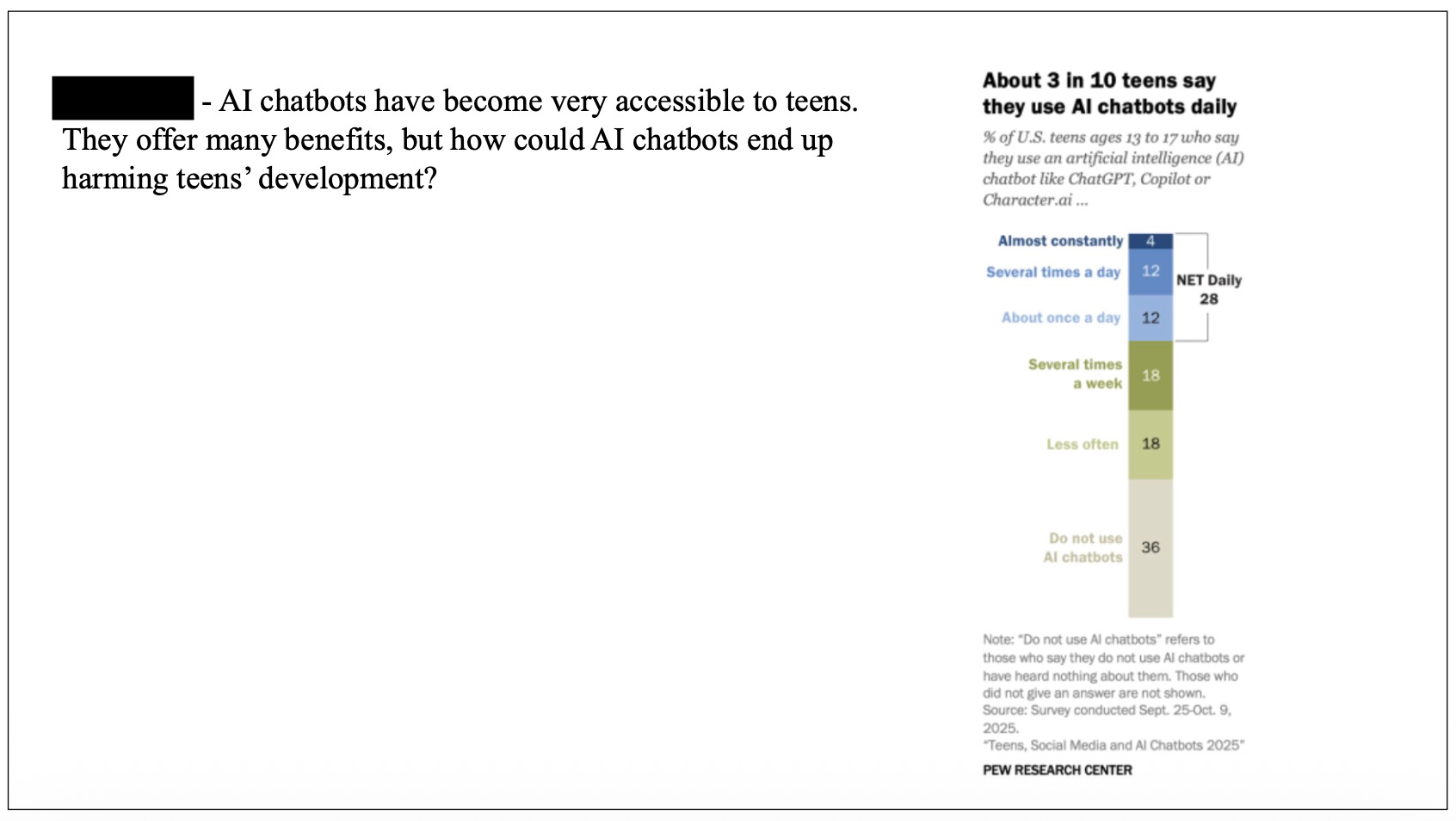
AI chatbots are the most patient, knowledgeable tutors a teenager has ever had access to — and simultaneously the most dangerous unrestricted adults in their lives. The table leaned toward chatbots over TikTok if forced to choose, but the sobering cases were impossible to dismiss: Turkey’s first-ever school shooting, with the perpetrator’s chat history reportedly showing AI reinforcement of destructive thinking; a teenager’s suicide following sustained interaction with a companion chatbot. The emerging view was that social media is clearly corrosive for both intellect and companionship, while AI may be good for both — but the guardrails are nowhere near sufficient, and the loneliness epidemic driving kids toward digital companions in the first place remains the deeper, unresolved disease.
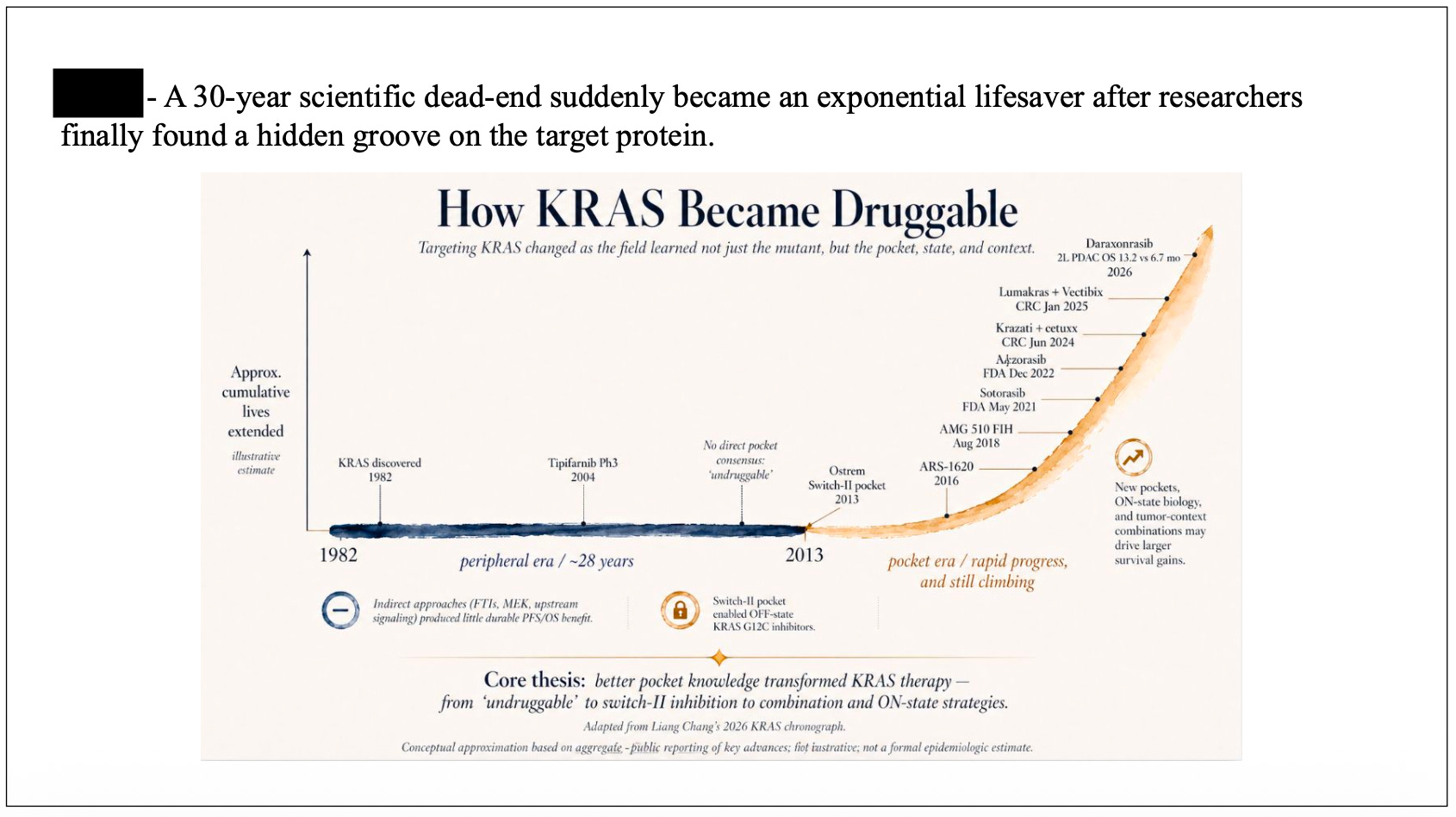
For 30 years, KRAS — the most infamous cancer-driving gene in biology — was known, characterized, and declared undruggable. Billions were spent. Nothing worked. Then in 2013, one researcher found the Switch II Pocket, a groove on the protein that everyone else had overlooked, and the floodgates opened. Weeks before this dinner, Revolution Medicine announced their KRAS-targeting drug had doubled overall survival in pancreatic cancer. The human weight was palpable: patients with no options, families watching loved ones waste away — many of whom had a KRAS mutation that is now druggable. The staggering implication: 80% of the human proteome is still considered undruggable. KRAS is just the first domino. We are entering a golden age for therapeutic development, only restrained by clinical trials which take a decade.
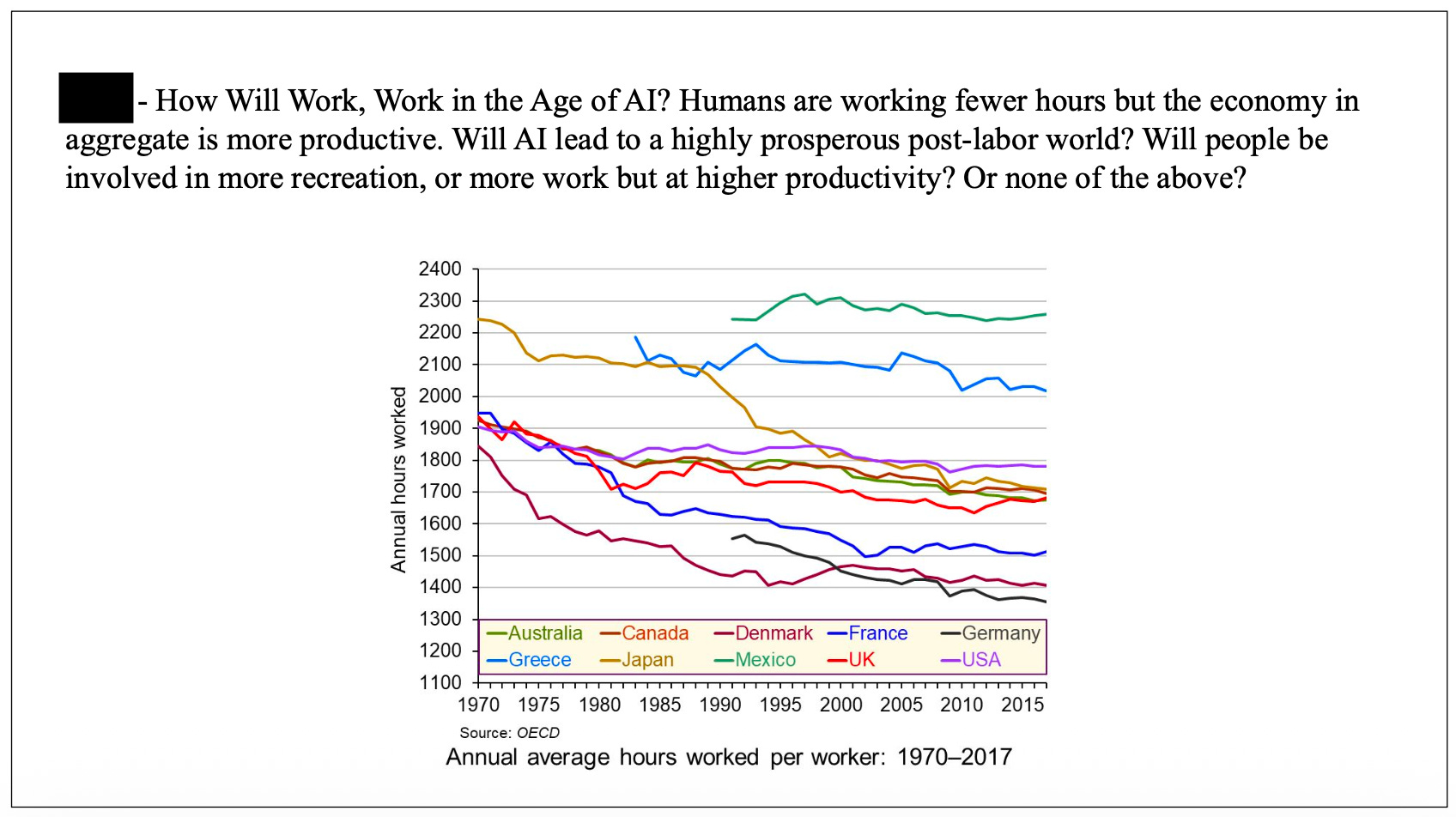
The work week has contracted for a century and AI is about to accelerate the collapse. Labor is 70% of the economy; if AI replicates it, what are humans for? The table surfaced a brutal philosophical thread: most people believe their jobs are important, but the vast majority of work may not be economically useful at all — 90%+ of startups fail, meaning thousands toil passionately on ventures that produce nothing. The question is whether AI-driven abundance triggers a Renaissance of creativity and presence, or whether humans simply invent purposeless work to avoid confronting their own irrelevance. Newer generations already seem to be reaching back toward family and analog life. The conversation ended on a question nobody could answer: who is actually happier — the person working 80-hour weeks, or the one on government benefits spending time with their family?
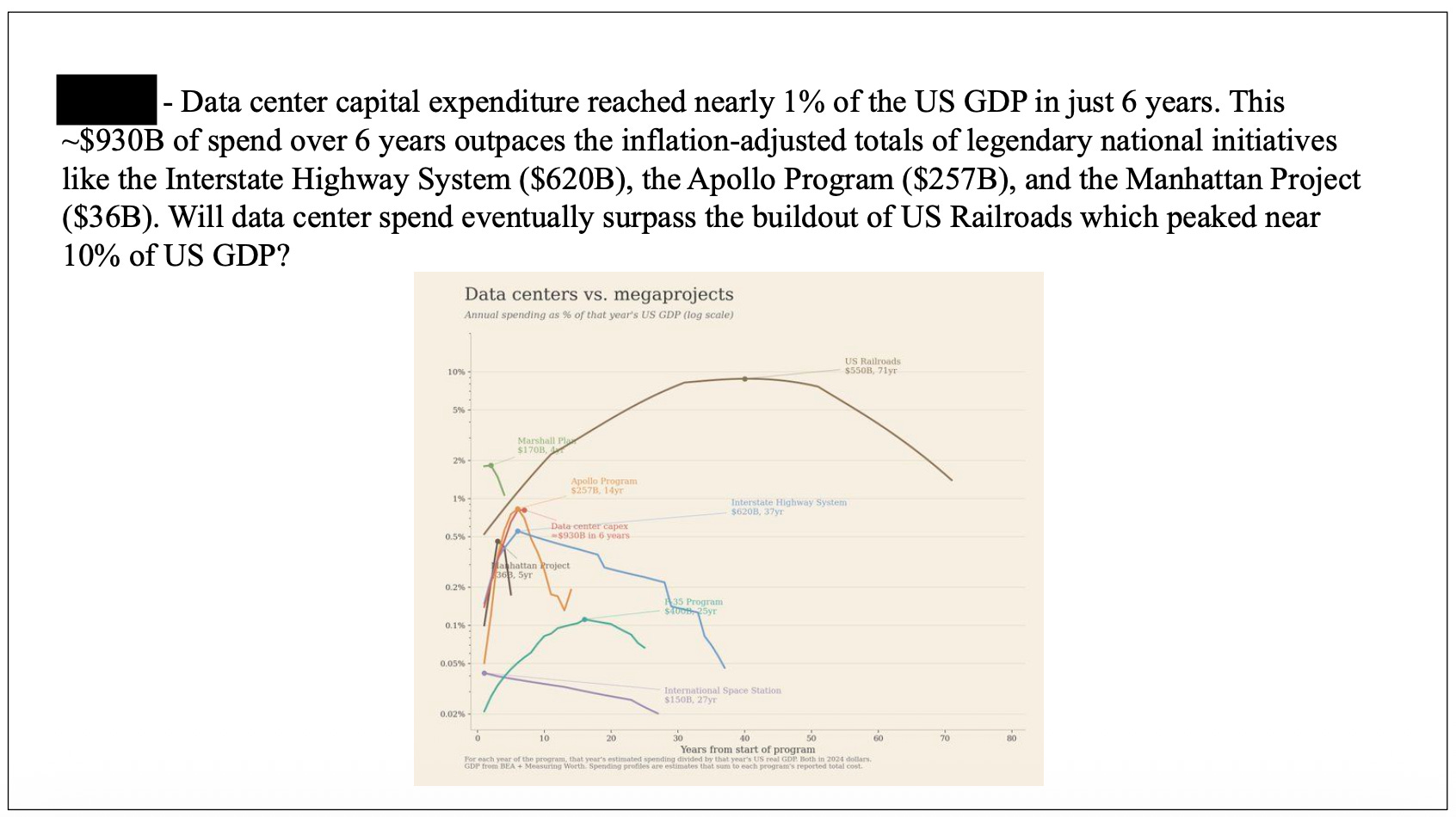
Data center capex has hit nearly 1% of US GDP in six years — $930 billion that already outpaces the Interstate Highway System, dwarfs Apollo and Manhattan, and is on a trajectory to surpass US railroad buildout. Google Cloud expects to be supply-constrained for the next decade. The product is on-demand superintelligence; of course there’s a shortage. But the detail that stopped the table: every other mega-project in American history was funded by the government. This is the first funded almost entirely by the private sector — companies like Google, Meta, Amazon — who will captively own that compute.
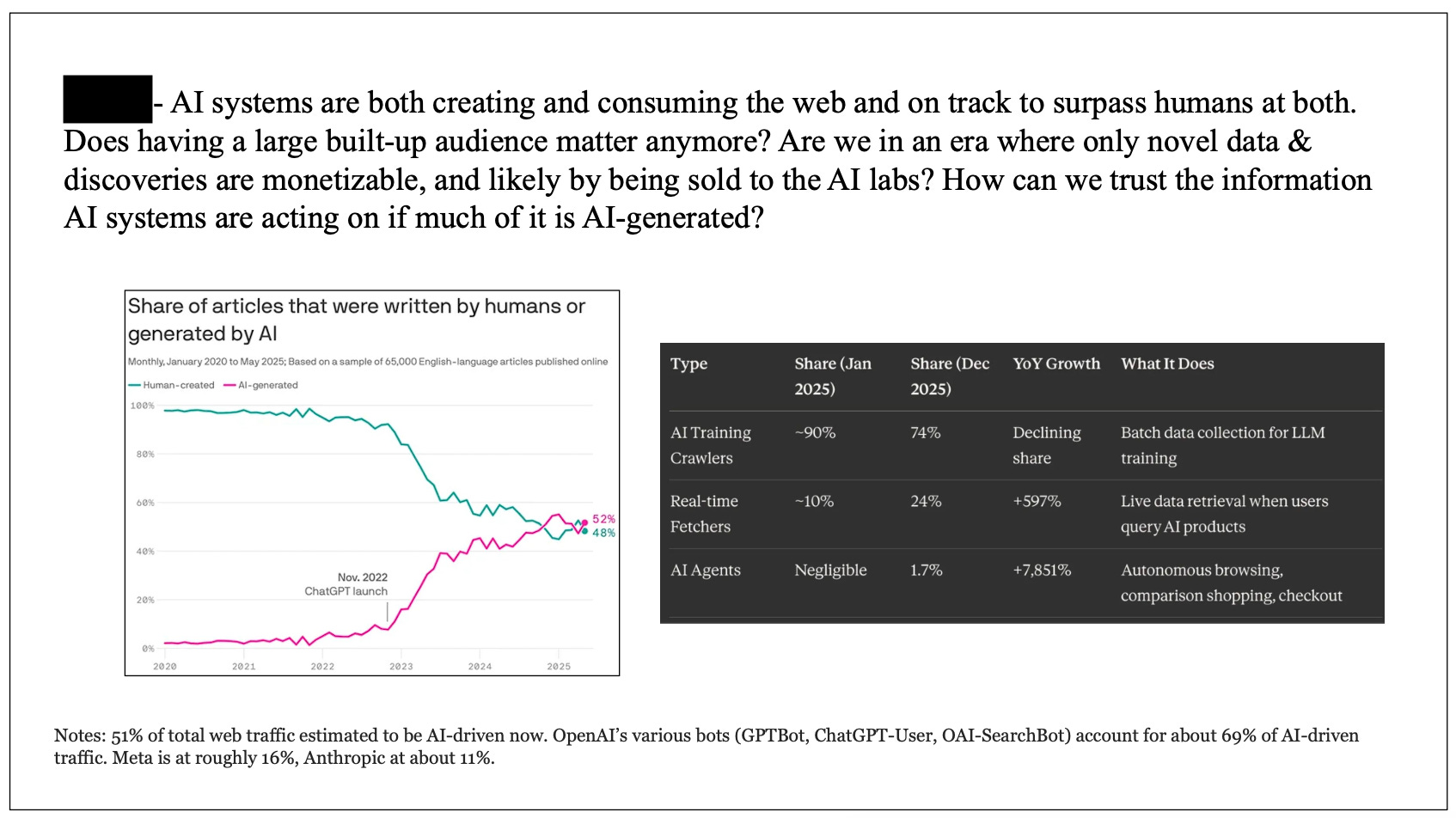
Over 50% of web traffic is now AI-driven. Over 50% of published articles are AI-generated. Humans are being removed from both sides of the equation. The corruption is already visible — Twitter replies that are 90% AI spam, articles on credible outlets that feel synthetic. Walled gardens like LinkedIn and Reddit are rate-limiting automated access and monetizing data partnerships while the open web is collapsing into synthetic slop. The business model implication is stark: we are past the era where interesting thoughts are monetizable. Only true progress — new research, new therapeutics, economic growth, proven breakthroughs — will command attention and value. Everything else gets drowned out. And if AI agents are the primary users of the Internet, then builders should be designing for agents, not humans, a paradigm shift that rewrites the entire logic of how software is built.
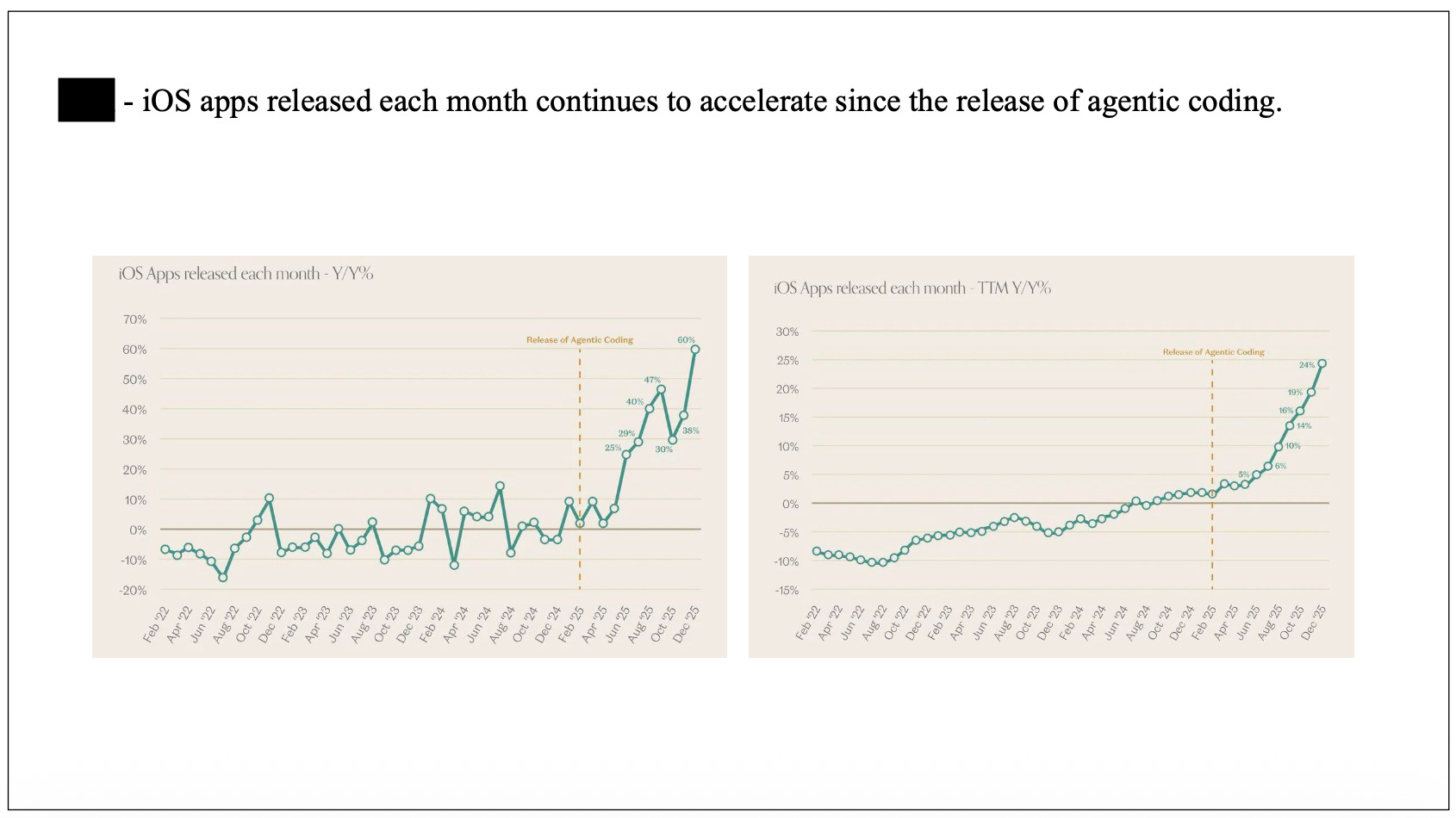
iOS app releases have gone into hypergrowth since agentic coding arrived — all the more remarkable because Apple has simultaneously made publishing harder. GitHub commit volumes have spiked so aggressively that the platform itself has become unstable. The democratization is real: a real estate broker built a live auction marketplace; a 20-year-old vibe-coded a top-200 App Store hit. But the table was not uniformly bullish. One attendee’s company spent an entire quarter rewriting vibe-coded software. The verdict: you cannot vibe-code an enterprise-grade product. Not yet. AI coding is transformative, but the hype is ahead of the products, and a reckoning is coming as user trust erodes and a small set of trusted applications separates from an ocean of slop.
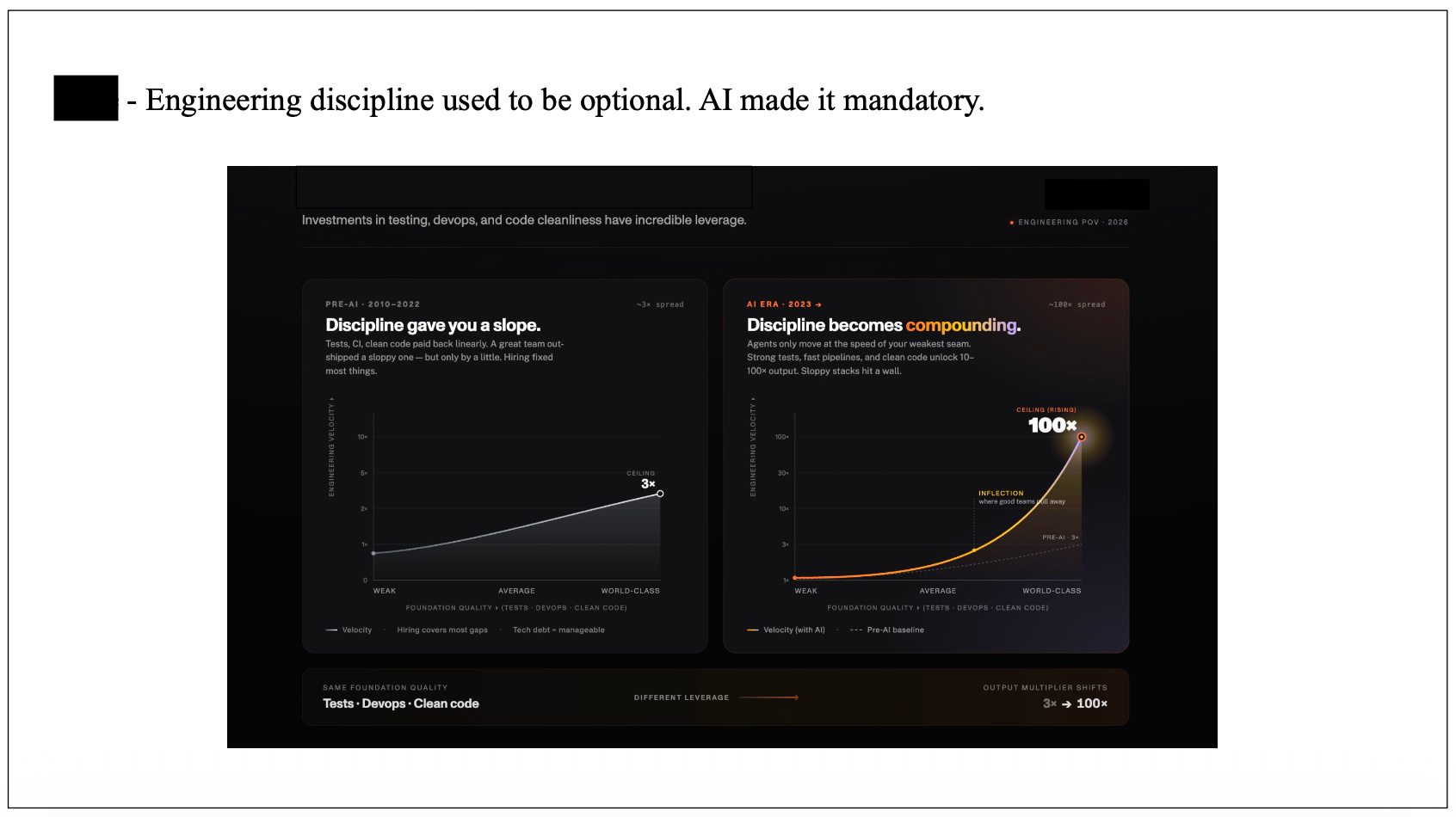
AI made engineering discipline mandatory. Because AI codes through pattern-matching, it needs clean architecture to perform; give it conflicting legacy patterns and it picks the wrong one. The constraint has flipped: coding used to be 80–90% of the work, but AI compresses it 100x, making DevOps, testing, and process the entire bottleneck. One attendee validated this immediately — their company previously ran on 15-minute test cycles, tolerable when humans wrote code slowly. This became unacceptable when AI generated 12 PRs in rapid succession. The prediction: human code review is going away entirely, replaced by automated agentic testing with no human in the loop. Engineers are no longer workers on the assembly line; their job is to build a new line that runs 1,000x faster. But the deeper thread was exhaustion — engineers aren’t writing elegant code in flow states anymore. They’re making constant rapid-fire decisions as their coding agent asks permission to act. Everyone is becoming a manager of work itself. And that is deeply, relentlessly exhausting.